Turn rehabilitation movements
into story missions.
An interactive storybook designed around hand-gesture rehabilitation activities and attention. I focused on comfortable participation for children and understandable results for caregivers.
Role
Co-founder · Product Designer
Period / status
About 6 months · Sep 2024–Mar 2025 · Concluded
People
Children aged approximately 5–8 with brain lesions in hospital settings, their caregivers and rehabilitation clinicians
Scope
Service planning, hand-gesture UX for children, story and activity interface design
Received one round of angel funding
An activity for the child, understandable progress for the caregiver.
Problem
Support comfortable participation in hand-gesture activities in a hospital setting.
Decision
Prioritize small movements and repetition based on actual feedback, and give movements a purpose through story missions.
My work
Co-founded the venture and designed the service, activity screens and prototype.
Documented result
Designs and prototype; one angel round reported by the team. The venture ended. Clinical effects were not measured.
VENTURE / PRODUCT DESIGN부카루 · Bookaroo
01 / CONTEXT
Rehabilitation activities for children in hospital.
This project was planned around rehabilitation exercises conducted by clinicians in hospitals. The primary users were children aged approximately 5–8 with brain lesions, participating through hand-gesture recognition rather than touch. The priorities were helping children attempt movements comfortably, attend to the activity and make their results understandable to caregivers.
02 / DESIGN DECISIONS
Designing for children’s participation.
01
A story for small, repeated movements
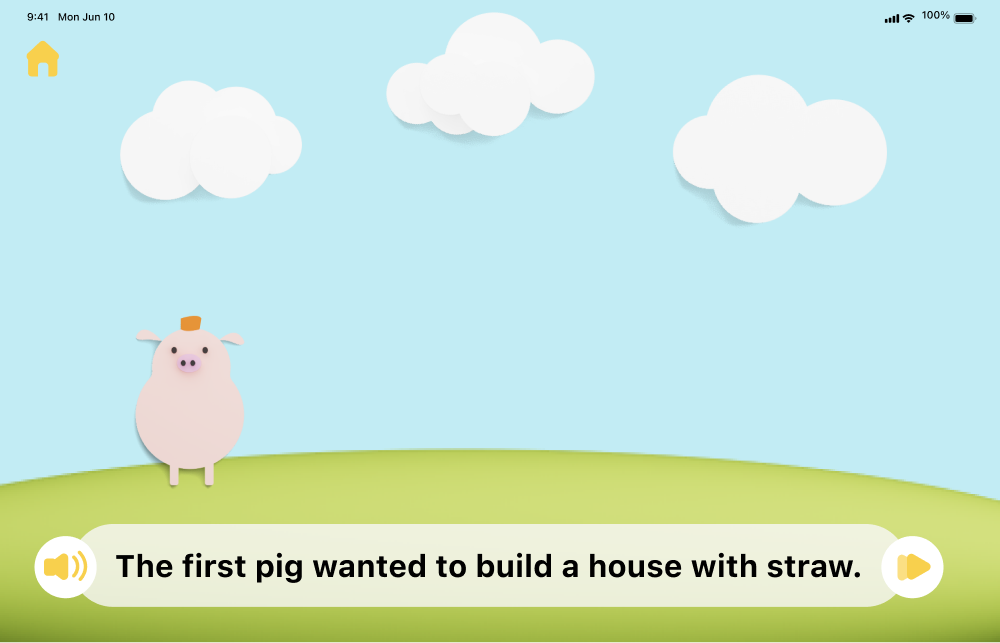
Actual feedback led me to prioritize small movements and repetition. I used that direction to shape hand movements into story missions and designed screens inviting children to participate.
I wanted the story to provide a reason to repeat small movements. This was a design direction informed by feedback, not a measured rehabilitation or attention outcome.
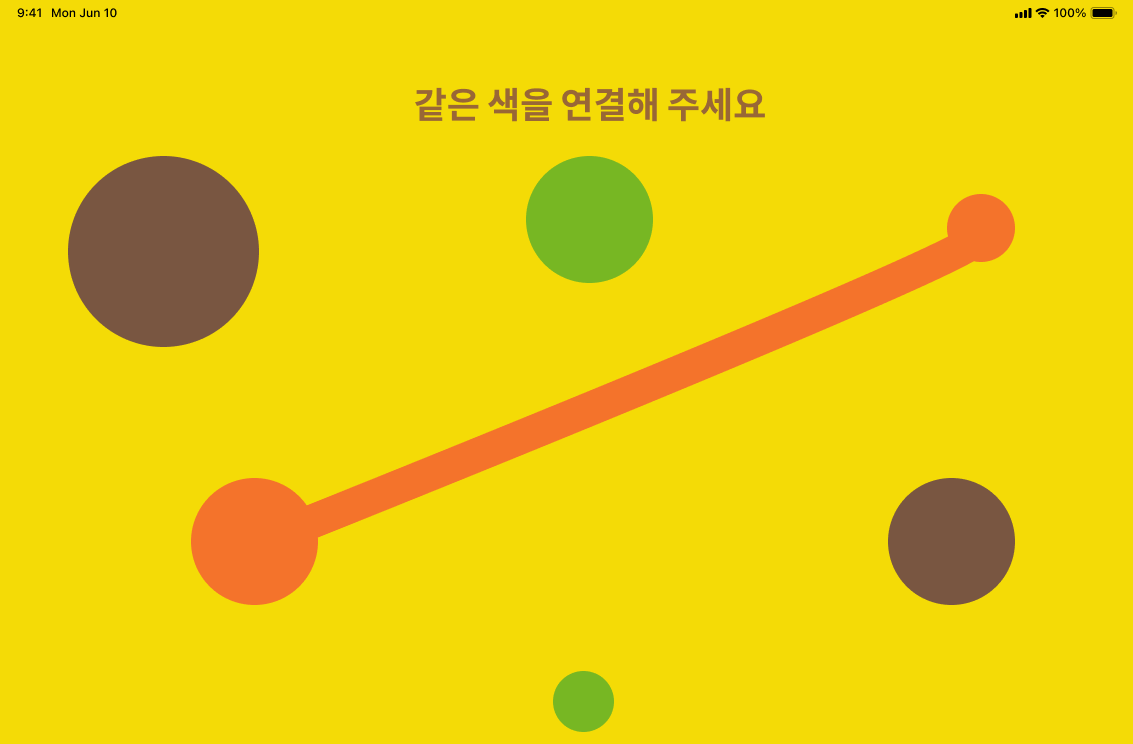
The Three Little Pigs · story mission · Figma design / Connect matching colors · original Figma UIView original screens ↗
02
Activity screens for children, results for caregivers
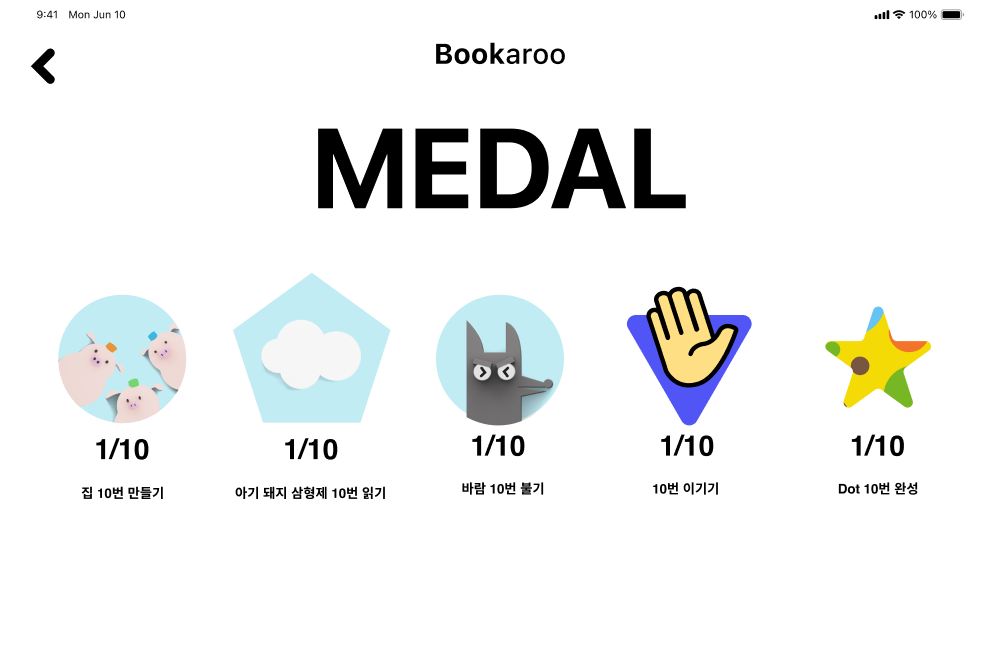
I designed story and play screens alongside a view of activity medals and progress.
The design addresses both children’s participation and caregivers’ need to understand the results. Medals represent activity progress.
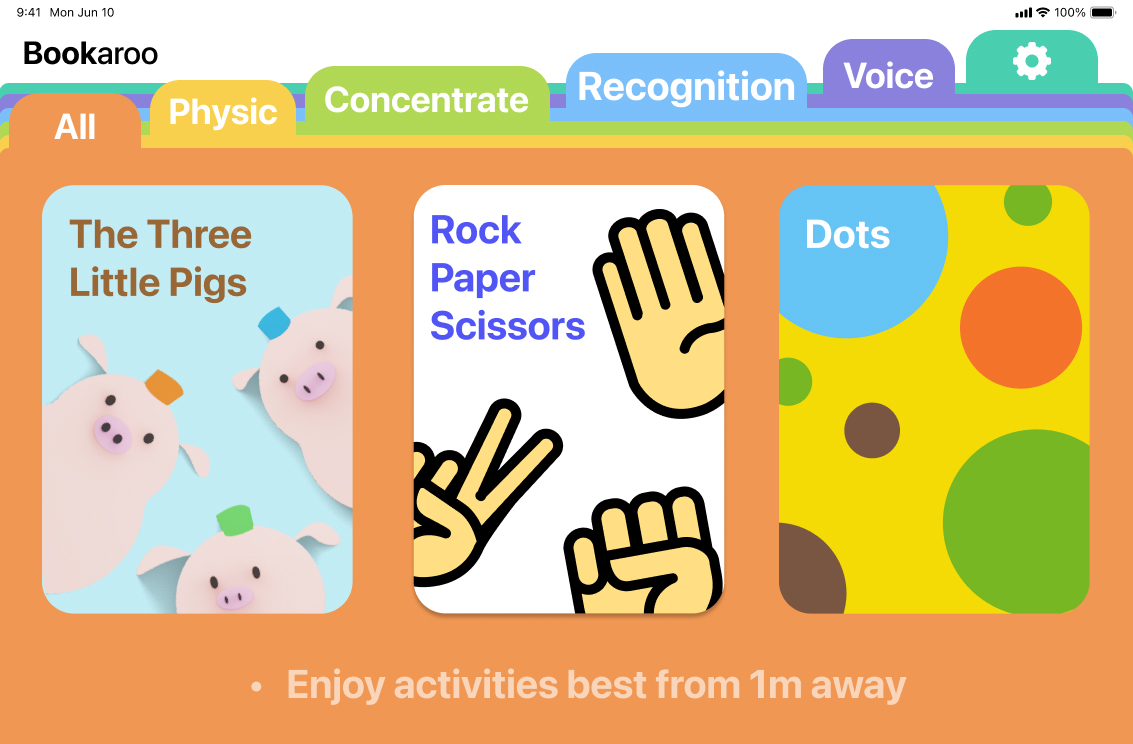
Home · stories and activities · original Figma UI / Activity medals and progress · Figma designView original screens ↗
03 / THE WORK
Look closer.
Select a screen to enlarge it. Captions identify the design or implementation stage.
01 / Choose a story or activity
Illustrated covers and colored tabs introduce the available activities.
01 / Home · stories and activities · original Figma UI02 / Color-coded activity tabs · original Figma UI
02 / Take part in the story
Story scenes and voice missions show different ways to participate.
01 / The Three Little Pigs · story mission · Figma design02 / Voice-based story mission · original Figma UI
03 / Set up, play and review progress
Activity timer, matching colored dots and reviewing medals.
01 / Set the activity timer · original Figma UI02 / Connect matching colors · original Figma UI03 / Activity medals and progress · Figma design
A little movement. A story forward.Animated illustration of the experience
04 / OUTCOME & REFLECTION
What I delivered.
I planned the service and hand-gesture activities for a hospital rehabilitation context and created story, play and progress screens and a prototype. I participated as co-founder for about six months. The venture received one round of angel funding and later concluded due to team operational circumstances. This case presents the design and prototype, without claiming measured rehabilitation or attention gains.
If I revisited the design
If I revisited the design, I would structure each activity as one story goal, a brief movement cue, an attempt, feedback, then a next activity or a break. I would distinguish between no attempt and a recognition failure, and check whether children can resume after resting.